All articles · Hydroponics · 4 min read
Hydroponic Vegetables: Are They Safe, Fresh and Worth Buying? What Chefs and Families Should Know
Key takeaways
- Hydroponic vegetables are grown in nutrient-rich water instead of soil, so they come out clean, uniform and grit-free.
- It typically uses a fraction of the water of field farming because the nutrient solution is recirculated.
- Leafy greens, herbs and some fruiting crops (cucumber, tomato) suit it best; root crops like turmeric and ginger do not.
- Hydroponic greens are usually washed-clean, uniform and long-lasting, which cuts kitchen wastage.
- For buyers, hydroponics means clean, uniform, predictable greens in every season — including the monsoon.
Lettuce in July. Basil in a heatwave. Crisp, uniformly sized greens that arrive clean enough to use with a light rinse. For chefs and caterers, these used to be difficult asks. Hydroponics — growing plants in water enriched with nutrients rather than in soil — has made them routine. This guide explains, from a buyer’s point of view, how hydroponic produce is grown, whether it is safe and tasty, and what to look for when you buy it.
What is hydroponics?
In soil farming, roots search for water and minerals dissolved in the soil. In hydroponics, we skip the search: the roots sit in, or are regularly bathed by, a nutrient solution containing nitrogen, phosphorus, potassium, calcium, magnesium, sulphur and a set of micronutrients in carefully balanced amounts. Plants are supported by an inert medium such as coco-peat, perlite, rockwool or simply a net cup and the system itself.
Because the grower controls what the roots receive, plants can be pushed to grow fast and evenly. Because there is no soil, there are no soil-borne diseases, no weeds, and far less need for crop-protection chemicals.
Why chefs and families like hydroponic greens
- Speed. Lettuce can be ready in roughly 30–45 days in a well-run system, depending on variety and season, compared with longer cycles in soil.
- Consistency. Every plant gets the same nutrition, so size, colour and texture are remarkably uniform — a big deal for restaurants that portion by the leaf.
- Cleanliness. No soil means no grit. Greens are easier to wash and carry fewer soil-borne pathogens.
- Water efficiency. Because the solution recirculates, hydroponic systems commonly use a small fraction of the water of conventional field growing for the same crop.
- Year-round supply. Inside a polyhouse with ventilation, shading and temperature management, growing does not stop for the monsoon or the summer heat in the same way it does in open fields.
- Small footprint. Stacked channels give far more plants per square metre.
Honest pros and cons for buyers
Hydroponics is not magic, and it is not automatically “better” than soil farming. It is a different tool with a different set of trade-offs.
Advantages
- Predictable quality and supply in every season.
- Much lower water use per kilo of produce.
- Fewer soil-borne diseases and weeds; less need for crop-protection sprays.
- Very little grit, so greens need less washing.
Limitations
- Usually priced a little above field greens, reflecting the controlled growing setup.
- Delicate leaves need cool, careful transport.
- Not suitable for every crop. Root, tuber and rhizome crops (potato, ginger, turmeric), grains and millets belong in soil.
- Nutrient solutions are made from mineral salts, so hydroponic produce cannot be certified organic under NPOP rules.
What is commonly grown hydroponically
- Lettuce — butterhead, loose-leaf, romaine and lollo varieties
- Herbs — basil, mint, coriander, parsley, oregano, thyme
- Leafy greens — spinach, kale, bok choy, rocket (arugula)
- Fruiting vegetables — cucumber, cherry tomato, capsicum in Dutch-bucket systems
- Strawberries in cooler hill locations
How to buy good hydroponic produce
- Check the roots and base. Fresh, living lettuce sold with roots intact lasts noticeably longer in the fridge.
- Look at the leaves. Crisp, glossy and evenly coloured; no yellow edges (nutrient stress), brown tips (tip-burn) or slimy patches.
- Ask about harvest time. The best suppliers harvest and dispatch the same day, and keep the cold chain from the farm to your kitchen.
- Ask about water and hygiene practices. Clean water, sanitised channels and hygienic handling are the real food-safety story of a hydroponic farm.
- Request grading and pack specs. Consistent weights and clean packaging make kitchen planning easy.
Storing hydroponic greens at home or in the kitchen
Keep leafy greens cold (roughly 2–4 °C) and slightly humid. Leave living lettuce in its original pack, or wrap loose leaves loosely in a clean cloth inside a container. Avoid washing until just before use — water on the leaf shortens its life. Do not store lettuce next to apples, bananas or tomatoes, which release ethylene gas that speeds browning.
Hydroponic greens from Dasaya Agriverse
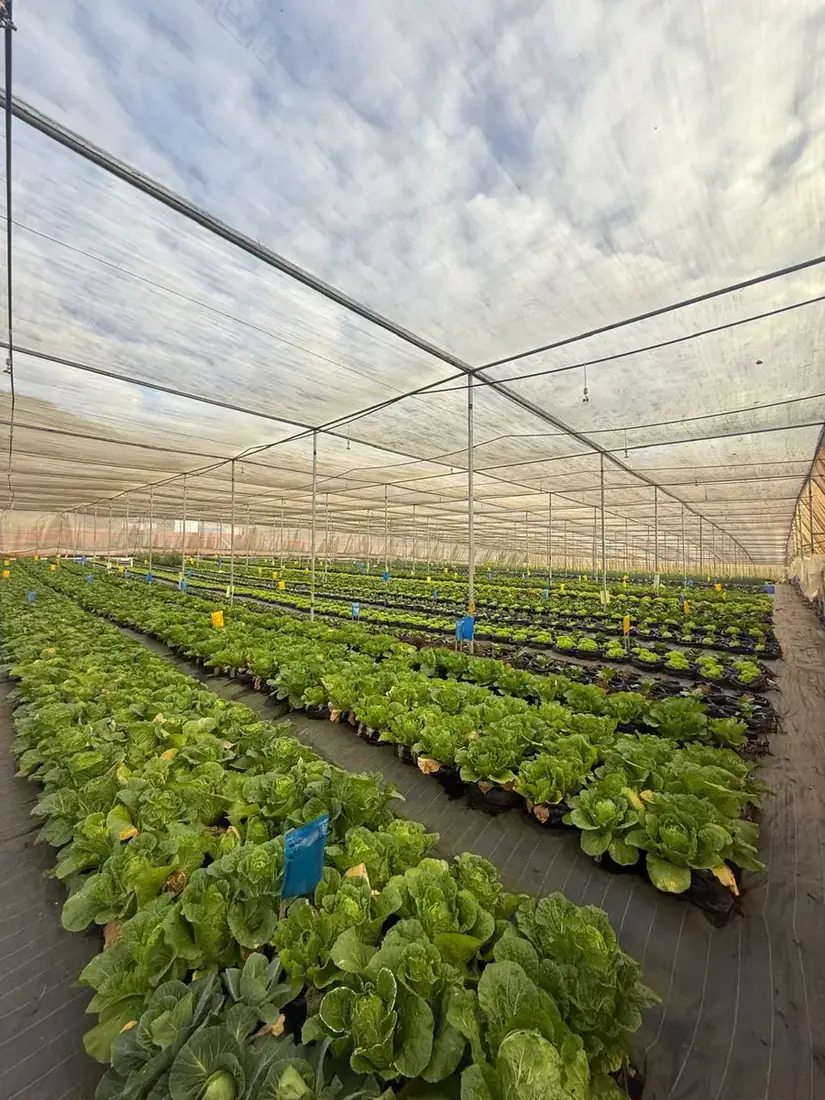
At our Semiliguda, Koraput farm we grow leafy greens and herbs in polyhouse hydroponic systems, alongside cucumbers and other vegetables, using precision irrigation. Our goal is simple: clean, uniform greens that reach restaurants, hotels, caterers and retailers fresh and on schedule — while the spices, grains and highland specialities that belong in the soil are grown and sourced the traditional way. If you would like weekly or daily supply of lettuce and herbs, our team can quote to your volumes.
Frequently asked questions
Is hydroponic food safe to eat?
Yes. Hydroponic produce is as safe as any other fresh produce when the water is clean, the system is hygienic and the harvest is handled properly. The nutrients are the same minerals plants take from soil.
Does hydroponic lettuce taste different?
Often it tastes milder and cleaner and is very crisp. Flavour depends on variety, nutrient balance and how fresh it is when you eat it.
How much water does hydroponics save?
Because water recirculates instead of draining into soil, recirculating hydroponic systems commonly use only a fraction of the water of field cultivation for the same crop. Exact savings depend on the system and climate.
Can ginger, turmeric or millets be grown hydroponically?
Not practically. Rhizomes, tubers and grain crops need soil and a longer season, and are best grown in the field, which is how we grow and source them from the Koraput highlands.
Is hydroponic produce organic?
No. Hydroponics uses mineral nutrient solutions, so it cannot be certified organic under India’s NPOP standards. It is better described as clean, controlled and pesticide-conscious.