All articles · Koraput specials · 5 min read
Koraput, Odisha: Why India’s Highland Farm Belt Grows Some of the Country’s Most Distinctive Produce
Key takeaways
- Koraput sits in the Eastern Ghats at a higher elevation than most of Odisha, giving it a cooler, wetter climate suited to spices, coffee and millets.
- The region’s traditional agriculture system has been recognised internationally as a globally important agricultural heritage system.
- Ginger, turmeric, black pepper, ragi and other small millets, coffee and forest honey are signature products.
- Mixed cropping and low external inputs are long-standing local practice.
- Buying direct from the region supports farmer incomes and gives you better traceability.
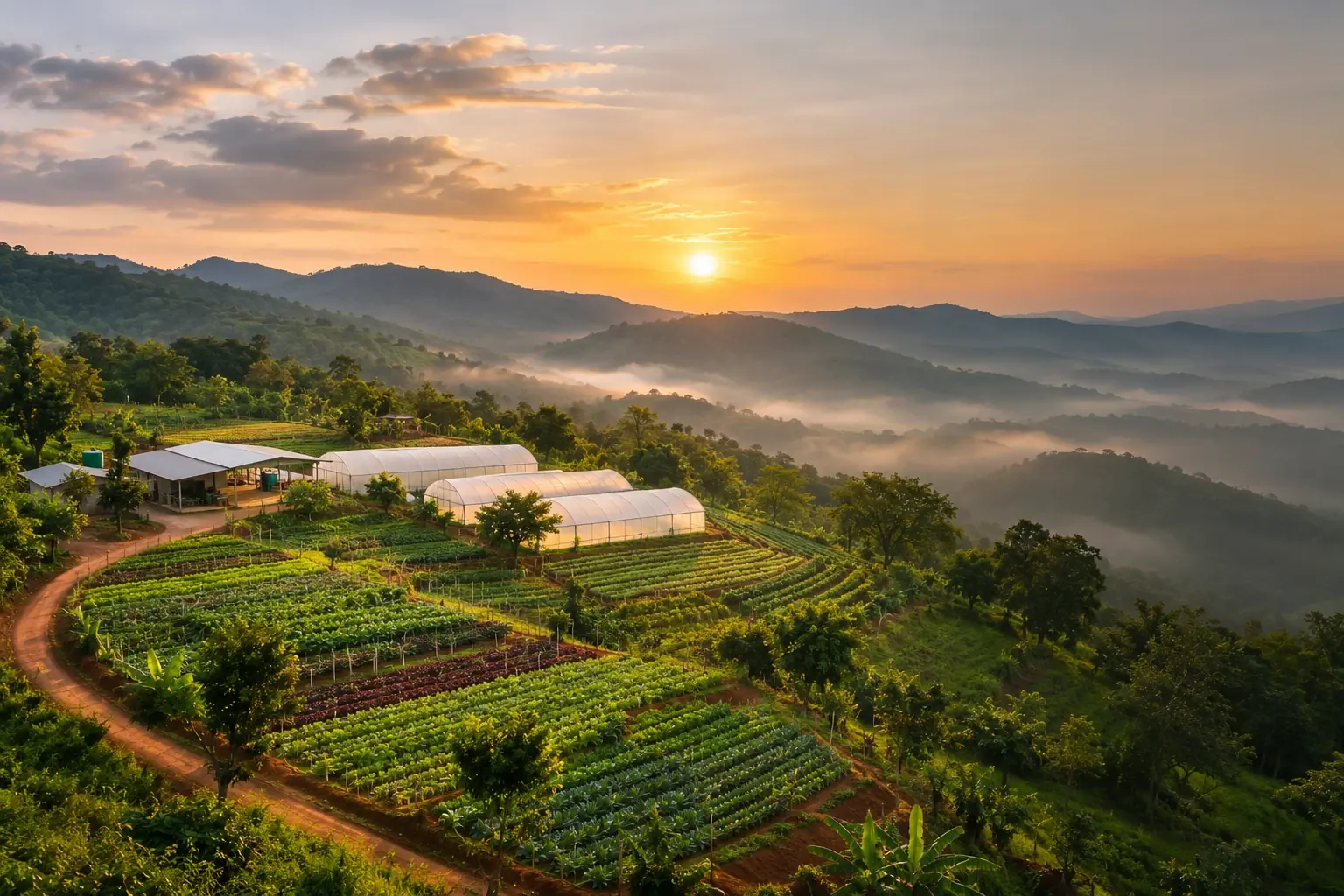
Say “Odisha” and many people think of coast, temples and rice. Travel inland and upward, into the Eastern Ghats, and a very different agricultural world appears: mist-wrapped hills, red soils, terraced millet fields, shade-grown coffee and spice gardens tended by communities that have farmed these slopes for generations. This is Koraput — and it is the home of Dasaya Agriverse. Here is what makes the region special and why its produce deserves a place in your kitchen or on your shelves.
The land and climate
Koraput district lies in south-western Odisha, bordering Andhra Pradesh and Chhattisgarh, with much of it sitting at elevations well above the coastal plain. Compared with the hot Odisha lowlands, the highlands enjoy cooler temperatures, reliable monsoon rainfall, and a long period of mild weather. Soils are largely red and lateritic — well-drained, slightly acidic and responsive to organic matter, which suits spices, millets and coffee. The surrounding forests also shelter the pollinators and wild flora that make hill honey distinctive.
A recognised traditional agriculture system
Koraput’s traditional agriculture has been recognised by the Food and Agriculture Organization of the United Nations as a Globally Important Agricultural Heritage System (GIAHS) — a designation given to farming systems that conserve biodiversity, local knowledge and landscapes. The region is known for its remarkable diversity of local crop varieties, particularly rice and millets, maintained by tribal communities through seed saving and mixed cropping. This heritage matters for buyers too: it means a wide pool of crops and varieties that are adapted to the area, and farming practices that often rely on little or no synthetic input.
Signature products of the Koraput highlands
Coffee
Coffee grows well in the shaded, high-rainfall slopes of Koraput, usually under a canopy of silver oak and other trees. Shade-grown Arabica and Robusta take longer to mature, which many growers and roasters believe gives a smoother, more rounded cup. Beans are harvested as red cherries, processed (washed or natural), dried and then sold as green beans or roasted. Koraput coffee is a growing speciality-coffee origin and is increasingly noticed by cafés and roasters across India.
Ginger and turmeric
Ginger and turmeric are rhizome crops that like warm, humid conditions, loose well-drained soil and plenty of organic matter. Highland-grown ginger is typically firm, aromatic and pungent, with good fibre and oil content; turmeric develops a deep, saturated yellow. Both are harvested after the main monsoon — roughly November to April depending on the crop — and are available fresh or dried. Our separate guide to turmeric and ginger explains how to judge quality.
Black pepper
Black pepper vines climb on support trees and thrive under light shade with high humidity. Berries are harvested when they begin to turn red, then boiled briefly and sun-dried until they blacken and wrinkle. Whole peppercorns hold their aroma far better than ground pepper, which loses volatile oils quickly.
Ragi and small millets
Ragi (finger millet), little millet, foxtail millet and others are staples here. They are hardy, rain-fed crops that need few inputs and tolerate poor soil and erratic weather — which is exactly why interest in them has surged as consumers look for nutritious, climate-resilient grains.
Honey and forest produce
Honey from the hills reflects the flowers of the surrounding forests and shifts in flavour with the season — lighter and floral in some months, darker and more robust in others. Alongside honey, communities collect forest produce such as sal resin, used as dhuna incense in rituals.
Vegetables and horticulture
The cooler climate also supports vegetables that struggle in the Odisha plains — cabbage, cauliflower, broccoli, carrots, beans and potatoes — and makes polyhouse growing of tomatoes, capsicum and salad crops practical.
The seasonal calendar
| Produce | Typical harvest window | Notes |
|---|---|---|
| Ginger | Nov – Mar | Fresh and dried; dried keeps for months |
| Turmeric | Jan – Apr | Raw fingers or dried; powder on request |
| Black pepper | Jan – Mar | Whole, sun-dried |
| Coffee | Dec – Mar | Green, roasted or ground |
| Ragi | Nov – Jan | Whole grain; flour available |
| Honey | Seasonal | Varies with forest flowering |
| Vegetables (polyhouse) | Year-round | Tomato, capsicum, cucumber, greens |
Harvest windows move with rainfall and altitude from year to year, so treat the table above as a guide and confirm availability before planning a large order.
Why mixed cropping and low-input farming matter
Many Koraput farms grow several crops together or in close rotation — a millet next to a pulse next to a spice. This spreads risk against bad weather and pests, keeps soil covered, and makes the system less dependent on bought-in fertiliser. It is the reason the area’s farming is often described as “organic by default”, although for a product to be sold as certified organic it must go through formal certification, which not every smallholder has done. It is a good habit as a buyer to ask what a supplier can document rather than assuming.
The challenges farmers face
- Distance from large markets, which means farmers often sell to middlemen at low prices.
- Limited cold storage and processing close to the farm.
- Weather variability, especially irregular monsoons.
- Little branding or grading, which hides quality and caps prices.
Companies that buy directly, grade carefully and pack properly can close that gap — raising farmer income while giving buyers a better, more consistent product.
Visiting and buying from Koraput
Koraput is a beautiful destination in its own right, with waterfalls, tribal markets and hill scenery. If you plan to visit, the post-monsoon months and winter are the most pleasant. If you cannot make the trip, you can still bring Koraput to your kitchen: Dasaya Agriverse sources and supplies ginger, turmeric, black pepper, ragi and millets, rice varieties, coffee, honey and more directly from the region, packed in sizes from retail packs to 50 kg bags.
Frequently asked questions
Where is Koraput?
Koraput is a district in south-western Odisha, in the Eastern Ghats near the border with Andhra Pradesh and Chhattisgarh. Dasaya Agriverse’s farm is at Semiliguda in the district.
What is Koraput best known for agriculturally?
Traditional mixed-crop farming, rice and millet diversity, coffee, ginger, turmeric, black pepper and forest honey.
Is all Koraput produce organic?
Many farms use few or no synthetic inputs by tradition, but “organic” as a label requires certification. Ask any supplier what certification, if any, applies to a specific product.
When is the best time to buy Koraput ginger and turmeric?
Ginger is typically harvested from around November and turmeric from January, with the peak of freshness in the months following harvest.
Can I order Koraput produce in bulk?
Yes. Dasaya Agriverse supplies bulk quantities to businesses and also smaller packs; send an enquiry with the item, quantity and delivery location.